A long range communication protocol used, for example, for remote people counting applications.
LoRaWAN stands for Long Range Wide Area Network. It is designed to wirelessly connect battery operated "things" to the internet. The stated range is 16 km in a clear line of sight and 5 km in built-up environments. The world distance record, though, is 1336 km. This was made with LoRaWAN trackers on a fishing boat in Portugal communicating with a gateway in the Canary Islands.
The system uses very little energy when communicating with sensors. Batteries can last for 10 to 15 years.
In default mode (class A), communication is initiated by the end device (such as the counter). The device can communicate at any time. It then leaves a window to receive instructions. This is the lowest power consumption mode. In other modes the network server can initiate communications. Modes can be switched to save power.
LoRaWAN is an global open protocol for wireless communication of real-time data. The standard was invented and is maintained by the LoRa Alliance, an non-profit association of collaborating members.
Lorawan can be used underground and will penetrate concrete.
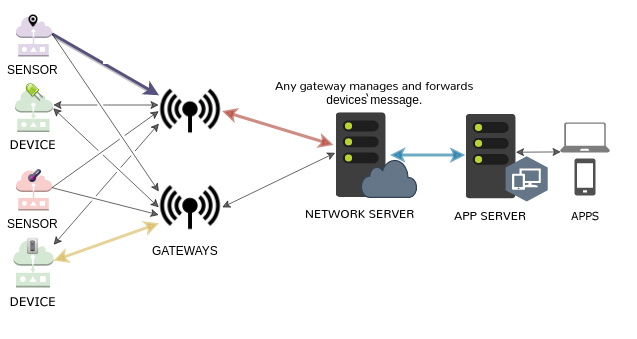
It is easy to scale and expand networks. LoRaWAN devices broadcast their messages to a gateway. An 8-channel gateway can handle a few hundred thousand messages a day. So if each device sends a message every 5 minutes, one gateway would support around 350 devices. If each device sent just ten messages a day, their number would go up to around 10 000 devices per gateway. With more gateways, more sensors and devices can be connected. The gateways will accept messages from all sensors within reach.
The gateways forward data to the LoRaWAN network server. These connections can be by Wi-Fi, Ethernet or cellular.
The network server or broker makes data available to the user applications, such as pollution monitoring or car counting apps.
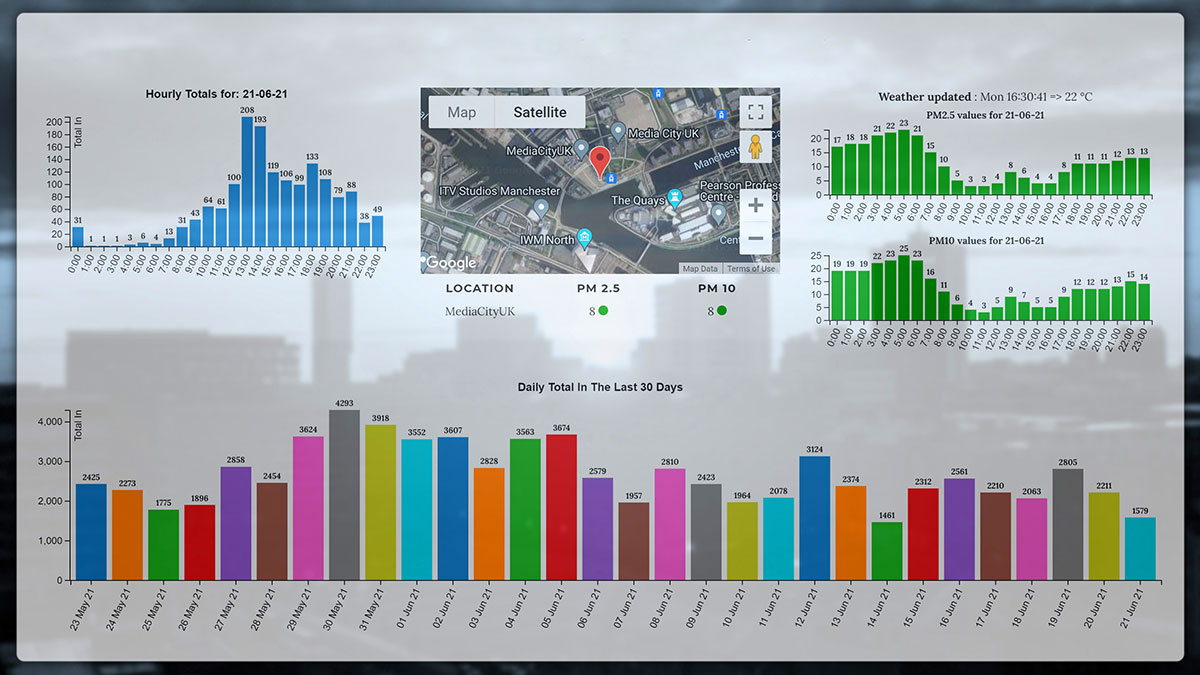
LoRaWAN is ideal for remote counting due to its low power consumption and long distance communication. For example, we are using it to
Retail Sensing combines 50 years of engineering expertise, with cutting-edge AI software, to deliver precise people and vehicle counting solutions. Over 15000 video counting systems installed across 40 countries, all GDPR compliant. Contact us for advice on your project.
10 Stocks Street, Manchester, M8 8QG, UK