Retailers are currently facing a data gap. Traditional metrics like footfall and sales explain what is happening, but fail to explain why. And in today’s competitive landscape, understanding the “why” is no longer optional.
Beyond the What to the Why
Without pinpointing the reasons for the sales, or lack of, you might be trying to fix entirely the wrong problem. If customers are not buying, the issue may be layout, signage, staffing or store flow — not price.
Why Customers Leave
Heatmapping, dwell-time analysis and path-tracking reveal why people leave. Did they get frustrated by a queue? Did they miss a signage cue? Were no assistants available to help? Behavioural insights turn lost sales into valuable information.
See Decisions, not just Transactions
POS systems show what people bought, but not what they looked at first, how long they considered alternatives, which displays they ignored or why they walked out empty-handed. Using AI behavioural insights tells you all these things
Solving the “Abandoned Cart” in Physical Spaces
In e-commerce, we track abandoned carts. In physical retail, we often ignore the “abandoned aisle”.
Behavioural tracking shows how long potential customers spend in a department without buying anything.
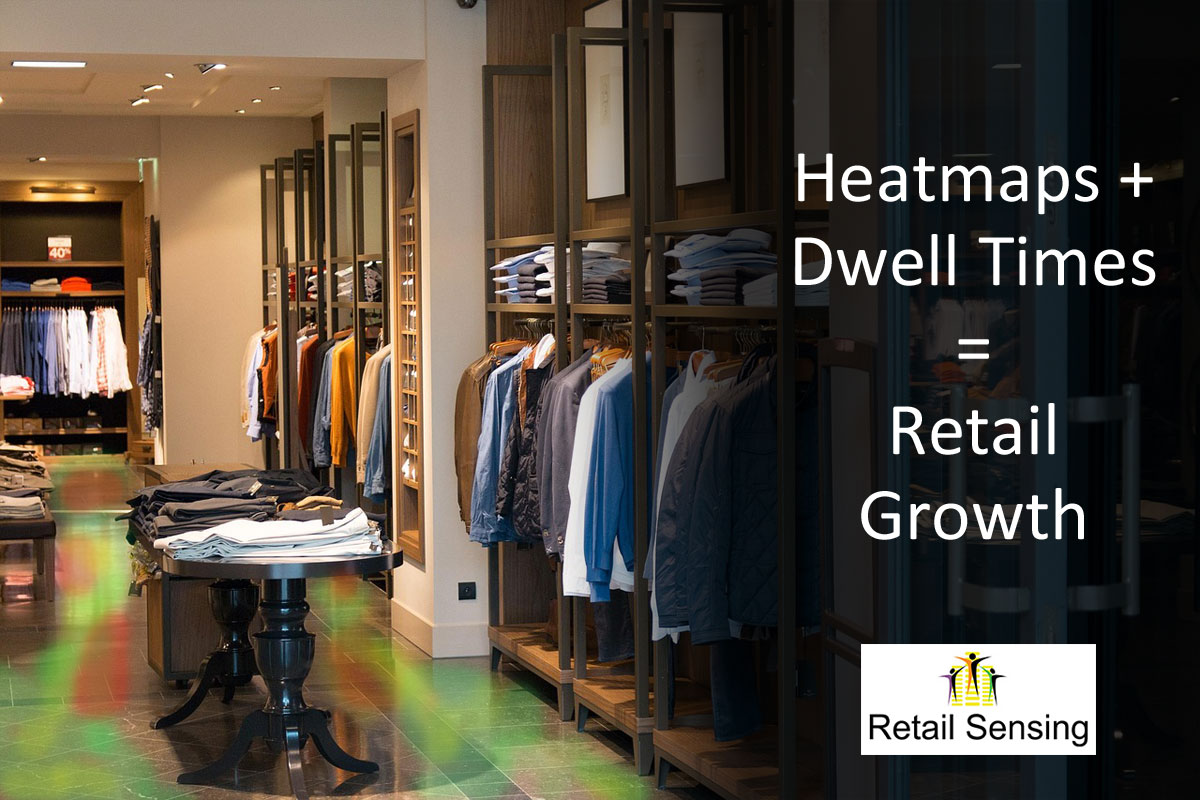
With this information we can address why they aren’t buying and test changes to rectify the lost sales. Turning the store into a laboratory – measure, change, analyse, improve.
Tracking the Journey from Entrance to Exit
Which entrance do customers use? What catches their attention first? How do they navigate the store? This shows what’s actually working compared to what you think is working.
Dwell time and engagement levels
Are people stopping at your new display or walking past it? Do they pick up products and put them back? How long do they spend in high-margin categories?
Staff effectiveness
When and where do customers need help? Are checkout queues causing abandonment? Which areas are understaffed during peak times?
Layout optimisation
Dead zones getting no traffic, hot zones that are overcrowded, optimal product placement based on actual flow patterns, not assumptions.
More Sales; Less Guesswork
For retail, the physical space is a high-cost asset. Plugging the data gap with behavioural insights ensures that every square metre is optimised for human psychology, reducing friction and leading to more sales and repeat visits.